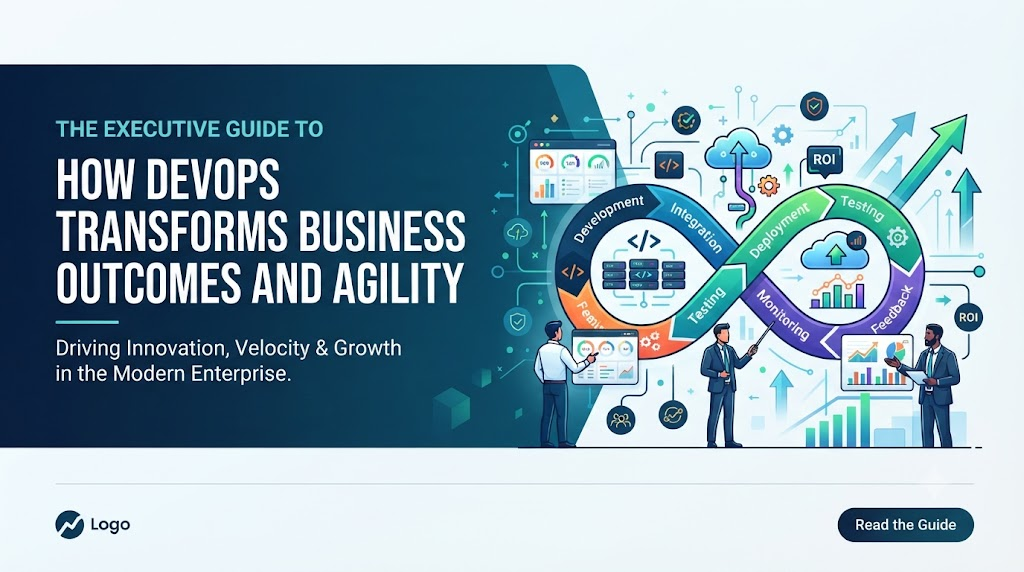
In today’s fast-paced digital economy, organizations must respond quickly to changing customer needs, as software delivery capabilities now directly influence overall business performance, revenue growth, and market relevance. Traditional, fragmented work patterns no longer suffice, which is why adopting a unified DevOps framework has become a critical enabler of digital transformation by bridging the gap between software development and operational stability. By harmonizing pipelines and leveraging structured training ecosystems like DevOpsSchool to master modern cloud architectures and automation, forward-thinking enterprises can simultaneously optimize technical workflows and drive key business outcomes—such as accelerated time-to-market, minimized operational downtime, and enhanced customer experiences.
DevOps is a conceptual framework, culture, and operational methodology that unifies software development (Dev) and IT operations (Ops). Historically, these two functional areas operated in deep silos, often burdened by conflicting goals. Development teams aimed to push out new features as quickly as possible, while operations teams prioritized infrastructure stability, which frequently led them to resist frequent changes. This modern paradigm eliminates these conflicting objectives by establishing a shared responsibility model across the entire lifecycle of an application.
At its core, this framework relies on five fundamental pillars that reshape how work flows from initial ideation to production environments:
Collaboration
The elimination of departmental silos ensures that software engineers, system administrators, security teams, and business analysts work together from day one. By sharing tools, metrics, and communication channels, teams gain deep visibility into the entire product lifecycle, reducing misunderstandings and accelerating problem-solving.
Automation
Human error during manual configurations remains a leading cause of system outages. By automating repetitive administrative tasks—such as environment provisioning, software builds, and testing protocols—organizations achieve consistent, predictable results while freeing valuable engineering hours for high-impact innovation.
Continuous Integration and Continuous Delivery (CI/CD)
CI/CD represents the operational backbone of modern delivery pipelines. Continuous Integration ensures that code changes from multiple developers are automatically merged, built, and tested in a shared repository daily. Continuous Delivery moves that validated code safely to testing, staging, and production environments, ensuring that software remains in a deployable state at all times.
Infrastructure as Code (IaC)
IaC treats infrastructure setups exactly like software code. Instead of manually configuring physical servers or cloud interfaces, operations teams define compute instances, network topographies, and storage volumes in machine-readable configuration files. This methodology ensures environments can be replicated perfectly, tracked in version control, and scaled automatically.
Continuous Improvement
Healthy modern engineering ecosystems embrace a persistent loop of feedback, measurement, and optimization. By regularly analyzing production telemetry, application performance, and organizational workflows, teams systematically eliminate waste, optimize systemic inefficiencies, and refine their processes over time.
Organizations do not invest in operational transformations simply to adopt new technical tools. The shift to a modern delivery framework is driven by clear business imperatives aimed at surviving and thriving in a volatile marketplace. Enterprises adopt these methodologies to address systemic operational bottlenecks and achieve concrete strategic advantages.
┌──────────────────────────┐     ┌──────────────────────────┐     ┌──────────────────────────┐
│  Faster Delivery Speed   │ ──> │ Enhanced Collaboration   │ ──> │ Improved Reliability     │
└──────────────────────────┘     └──────────────────────────┘     └──────────────────────────┘
             │                                                                 │
             ▼                                                                 ▼
┌──────────────────────────┐     ┌──────────────────────────┐     ┌──────────────────────────┐
│  Greater Visibility      │ ──> │ Operational Efficiency   │ ──> │ Stable Innovation Focus  │
└──────────────────────────┘     └──────────────────────────┘     └──────────────────────────┘
Faster Delivery Speed
In a digital economy, the first organization to market with a solution usually captures the largest customer base. Adopting these modern workflows allows businesses to shrink development timelines from months to days, or even hours. This agility allows organizations to seize sudden market opportunities and outpace slower competitors.
Enhanced Collaboration
Fragmented departments breed communication gaps, finger-pointing during system outages, and misaligned priorities. Unifying these areas creates an environment where teams share success and failure equally. This shared alignment breaks down operational barriers and ensures that everyone works toward overarching organizational objectives rather than localized departmental goals.
Improved Reliability
System downtime degrades brand reputation and causes immediate financial losses. By embedding automated testing, standardizing deployment configurations, and running continuous validations throughout the delivery pipeline, companies significantly lower their software defect rates, resulting in highly stable production applications.
Greater Visibility
Traditional engineering workflows often suffer from operational blind spots, where leadership cannot easily track the progress of features or locate the source of delivery delays. Modern frameworks utilize centralized monitoring, comprehensive logging, and shared dashboards to provide complete, end-to-end transparency across the entire business value stream.
Operational Efficiency
Manual tasks like setting up servers, running ad-hoc tests, and performing multi-step manual deployments slow down engineering teams and increase operational costs. Eliminating these repetitive tasks through comprehensive automation allows organizations to run lean, maximize infrastructure utilization, and reduce overall operational waste.
Stable Innovation Focus
When engineering teams spend most of their time firefighting system crashes, fixing legacy bugs, and managing unstable code deployments, strategic innovation stalls. Stabilizing the production environment and streamlining deployment workflows frees up engineering cognitive capacity, allowing teams to focus on creating new, value-generating features for customers.
The true value of an operational transformation lies in its ability to convert engineering practices into measurable business results. This process follows a structured transformation flow, where strategic high-level choices trigger a chain reaction that ultimately enhances market performance and customer satisfaction.
[Business Goals] ➔ [Cross-Functional Collaboration] ➔ [Automation] ➔ [CI/CD]
                                                                      │
[Improved Customer Experience] ◀─ [Continuous Feedback] ◀─ [Monitoring] ◀─ [IaC]
        │
        ▼
[Business Growth] ➔ [Continuous Improvement]
Code language: CSS (css)
1. Business Goals
The transformation begins by explicitly identifying core corporate objectives, such as expanding market share, improving service retention, or lowering operational overhead. Technology initiatives must directly support these targets to ensure IT investments drive real business value.
2. Cross-Functional Collaboration
Once business goals are clear, organizations eliminate functional silos by forming integrated, cross-functional teams. Bringing product owners, developers, security engineers, and operations personnel together aligns all stakeholders toward shared delivery objectives right from the start.
3. Automation
With aligned teams in place, organizations focus on identifying and eliminating repetitive manual processes. Teams create automated software builds, script verification routines, and build structured workflows to ensure tasks are completed quickly, accurately, and repeatedly.
4. Continuous Integration and Continuous Delivery (CI/CD)
Automated steps are organized into integrated CI/CD pipelines. This technical setup ensures that whenever an engineer updates code, the changes are automatically validated, packaged, and prepared for production deployment, keeping the software constantly ready for release.
5. Infrastructure as Code (IaC)
To keep pace with accelerated application updates, underlying environments are managed using Infrastructure as Code. Cloud resources and local systems are provisioned through version-controlled files, eliminating manual configuration drift and ensuring consistent environments across dev, staging, and production.
6. Monitoring & Observability
Once software is deployed, comprehensive monitoring and telemetry engines keep track of application behavior, user workflows, and system health in real time. This continuous visibility allows teams to discover potential performance issues before they impact end users.
7. Continuous Feedback
Data collected by observability tools flows directly back to product managers, developers, and operations teams. This loop provides empirical evidence regarding user engagement, system performance, and software quality, guiding subsequent development priorities.
8. Improved Customer Experience
Data-driven improvements and rapid feature rollouts lead to highly responsive, reliable digital products. Users experience fewer service disruptions, enjoy faster bug resolutions, and regularly receive new features that genuinely address their needs.
9. Business Growth
Satisfied customers stick around longer, buy more services, and recommend the platform to others. This increased retention and acquisition boosts organizational revenue, enhances brand value, and expands the company’s overall market footprint.
10. Continuous Improvement
The entire lifecycle operates as a continuous loop. The business uses its expanded market footprint, fresh revenue, and operational data to further refine its delivery systems, optimize its technology stack, and uncover new opportunities for long-term growth.
The strategic impact of operational modernization spans multiple core areas of an enterprise. The table below details how technical changes directly drive measurable business outcomes.
| Business Outcome | How DevOps Contributes | Organizational Impact |
| Faster time-to-market | Streamlines delivery pipelines and cuts down manual approval delays. | Enables rapid feature releases and lets the company capture time-sensitive market opportunities ahead of competitors. |
| Improved customer satisfaction | Ensures highly reliable software rollouts and accelerates bug fixes. | Delivers smoother user experiences, leading to higher customer retention rates and positive brand sentiment. |
| Operational efficiency | Replaces labor-intensive manual steps with automated workflows. | Minimizes operational waste, controls overhead costs, and allows teams to scale without adding matching headcount. |
| Reduced downtime | Leverages automated testing, configuration management, and pro-active monitoring. | Prevents costly service outages, preserves revenue streams, and maintains service level agreements (SLAs). |
| Increased innovation | Stabilizes production environments, freeing up engineering resources. | Shifts engineering focus from constant firefighting to building new, value-generating features for the market. |
| Better risk management | Employs small, incremental code releases that are simple to audit and rollback. | Lowers the blast radius of software bugs and ensures predictable, stable software rollouts. |
| Stronger security | Implements automated compliance checks and security scanning early in the pipeline. | Reduces vulnerability windows, protects sensitive corporate data, and satisfies regulatory requirements. |
| Improved employee productivity | Eliminates repetitive tasks and removes frustrating operational bottlenecks. | Enhances team morale, lowers employee burnout rates, and helps retain top-tier engineering talent. |
Traditional software development models often slow down delivery due to rigid, sequential workflows. Code sits idle for weeks waiting for QA validation, security audits, or manual server provisioning. A modern operational approach removes these systemic blockages by transforming how applications are built, verified, and shipped.
Traditional:  [Design] -> [Code] -> [Wait for QA] -> [Wait for Ops] -> [Manual Deploy] (Months)
Modern:       [Code -> Automated Test -> Automated Security Check -> Production Release] (Hours)
Code language: CSS (css)
Continuous delivery models keep code in a constantly deployable state. When an engineer finishes a feature, automated pipelines immediately run the code through a series of rigorous testing environments. This eliminates the need for massive, high-risk end-of-quarter software updates, allowing enterprises to ship small, stable increments of value whenever the business requires.
Deployment automation further accelerates this process by removing manual steps from the release phase. Teams replace error-prone, manually compiled deployment checklists with standardized, script-driven pipelines. This ensures that whether code is moving to a test environment or a production cluster, the execution path remains identical, predictable, and remarkably fast.
By shortening these cycles, organizations establish rapid feedback loops. Engineering teams learn within minutes—rather than weeks—whether a newly introduced feature functions correctly or breaks a dependency. This immediate visibility allows developers to fix issues on the spot, preventing technical debt from accumulating and ensuring that high-quality software reaches users at an accelerated pace.
Modern consumers have very little patience for buggy software interfaces or slow service responses. If an enterprise mobile app crashes during a transaction or fails to update its features regularly, users will quickly switch to a competitor. Business growth relies directly on an organization’s ability to consistently deliver stable, high-performance digital experiences.
Maintaining reliable applications requires proactive operational design. By running automated, comprehensive tests throughout the delivery cycle, organizations prevent user-facing bugs from slipping into production. The resulting application stability builds deep trust with users, establishing the platform as a reliable tool they can depend on daily.
┌────────────────────────────────────────────────────────┐
│             High-Availability Architecture             │
├───────────────────────────┬────────────────────────────┤
│ Automated Canary Releases │ Real-Time Telemetry & Logs │
└───────────────────────────┴────────────────────────────┘
                            │
                            ▼
┌────────────────────────────────────────────────────────┐
│     Minimal Disruption & Optimal User Satisfaction     │
└────────────────────────────────────────────────────────┘
Furthermore, modern deployment strategies like canary releases and blue-green deployments drastically reduce service disruptions. Instead of taking systems offline for updates, businesses roll out changes to a small subset of users first. The system monitors live performance data, and if any issues crop up, it automatically rolls back the update, ensuring the broader customer base experiences no downtime whatsoever.
This agility allows businesses to build a customer-centric development loop. When users request a feature or report a usability issue, product teams can prioritize, build, test, and ship the fix within days. This rapid responsiveness proves to customers that the company values their input, which dramatically improves customer retention, Net Promoter Scores (NPS), and long-term brand equity.
Manual IT operations are expensive, slow, and prone to human error. When engineers spend their days manually setting up virtual machines, updating software dependencies on individual servers, or running repetitive regression tests, operational costs climb while productivity stalls. Modern delivery frameworks replace these manual bottlenecks with optimized, automated systems.
Manual Operations:      High Human Error + Inconsistent Setups + Escalating Costs
Automated Infrastructue: Standardized Templates + Repeatable Processes + Controlled Spend
Code language: JavaScript (javascript)
Automation serves as the foundation for driving down these operational costs. Standardizing environment setups and validation checks allows organizations to complete tasks in minutes that used to take days. This drastic reduction in manual effort allows existing IT teams to manage expanding cloud footprints without requiring a matching increase in department headcount.
Resource optimization also extends directly to infrastructure management. Utilizing Infrastructure as Code (IaC) allows companies to dynamically spin up environments when they are needed for testing and tear them down the moment those tests finish. This precise control over computing resources prevents cloud waste, optimizes infrastructure spend, and ensures the organization only pays for active, value-generating assets.
Additionally, standardizing processes creates highly predictable environments across the entire organization. When development, testing, and production systems share identical configurations, teams eliminate the classic “it works on my machine” issues. This consistency simplifies system troubleshooting, streamlines auditing, and ensures the entire technology platform operates reliably at a lower cost.
In traditional corporate environments, developers and operations personnel often work in isolation, communicating only through formal ticketing systems. This lack of transparency breeds misaligned priorities and finger-pointing when systems experience issues. Modern organizational strategies replace this siloed mindset with a culture of shared responsibility and open communication.
Siloed Mindset:      Dev Teams (Build Features)  ──[Ticketing Wall]──> Ops Teams (Maintain Stability)
Shared Alignment:   Integrated Squads [Dev + Ops + Sec] ──> Unified Focus on Business Value
Code language: CSS (css)
Building cross-functional teams is central to this cultural shift. By grouping developers, operations experts, security specialists, and product managers into dedicated product squads, everyone gains a shared understanding of both feature requirements and operational constraints. This close alignment ensures that software is designed for long-term production stability right from the start.
This collaborative environment relies heavily on a blameless culture. When an unexpected system outage occurs, teams don’t waste time trying to assign individual blame. Instead, they focus on running a blameless post-mortem to analyze the systemic root causes of the failure and implement automated safeguards to prevent the issue from happening again.
Shifting from individual blame to systemic improvement builds deep institutional trust and encourages healthy innovation. Engineers feel empowered to suggest process improvements, share technical knowledge, and collaborate across departments. This open culture speeds up problem resolution, boosts employee morale, and aligns the entire organization around delivering business value.
Treating security as an afterthought often leads to significant business risks. In traditional development pipelines, security reviews happen right before production releases, frequently uncovering critical vulnerabilities that require expensive, last-minute architectural redesigns. Integrating security directly into the development lifecycle mitigates these risks from day one.
Traditional Security: [Plan] -> [Code] -> [Build] -> [Test] ───────────────> [Security Audit] ➔ (Delay)
DevSecOps Framework:  [Plan] -> [Code] -> [Automated Scan] -> [Build] -> [Test] ──> [Safe Release]
Code language: CSS (css)
This integrated approach shifts security practices left, embedding automated vulnerability scans, dependency checks, and compliance audits directly into the CI/CD pipeline. Every time an engineer saves code, automated systems check it for known vulnerabilities, hardcoded secrets, and compliance deviations, catching and fixing issues long before they reach production.
Continuous monitoring tools extend this protection to running production environments. Automated security systems constantly scan production infrastructure for anomalous behavior, unauthorized configuration changes, or potential intrusion attempts. This real-time visibility ensures that if a vulnerability is detected, incident response teams can quickly isolate and resolve the threat.
| Operational Area | Traditional Risk Level | Modern Risk Level | Business Protection |
| Code Vulnerabilities | High (Discovered late) | Low (Scanned instantly) | Prevents data breaches and security exploits. |
| Compliance Audits | High (Manual collection) | Low (Automated posture) | Eliminates regulatory fines and compliance penalties. |
| System Outages | High (Complex rollbacks) | Low (Rapid rollbacks) | Protects daily operational revenue and user trust. |
By automating compliance validation and threat detection, organizations build strong systemic resilience. This proactive security posture minimizes data breach risks, protects corporate digital assets, and simplifies adherence to strict regulatory standards like GDPR, HIPAA, and PCI-DSS, protecting the company’s market reputation.
An enterprise transformation requires clear, data-driven metrics to prove its impact. Organizations use objective Key Performance Indicators (KPIs) to track the health of their delivery systems and connect engineering investments directly to broader business performance.
┌────────────────────────────────────────────────────────┐
│                   DORA Core Metrics                    │
├───────────────────────────┬────────────────────────────┤
│   Deployment Frequency    │   Lead Time for Changes    │
├───────────────────────────┼────────────────────────────┤
│    Change Failure Rate    │ Mean Time to Recovery MTTR │
└───────────────────────────┴────────────────────────────┘
The table below breaks down the foundational DORA (DevOps Research and Assessment) metrics alongside key business value indicators, showing exactly why they matter to executive leadership.
| Metric | Why It Matters | Business Value |
| Deployment Frequency | Measures how often the organization safely deploys code upgrades to production. | Indicates high organizational agility and the capacity to deliver value to customers continuously. |
| Lead Time for Changes | Tracks the total time it takes for a commit to successfully travel from development to production. | Reflects how quickly the organization can respond to new market demands or competitive threats. |
| Change Failure Rate | Calculates the percentage of production deployments that result in service degradation or require immediate rollbacks. | Serves as a direct indicator of software quality, release stability, and pipeline testing accuracy. |
| Mean Time to Recovery (MTTR) | Measures the average time required to restore a primary service when a production outage occurs. | Demonstrates systemic resilience and directly limits financial losses during unexpected system failures. |
| Customer Satisfaction (CSAT / NPS) | Monitors user happiness, feedback trends, and overall platform sentiment. | Validates that new feature releases are actually meeting user needs and driving customer retention. |
| Service Availability | Tracks the total uptime percentage of critical production infrastructure and consumer-facing applications. | Safeguards core corporate revenue streams and ensures compliance with customer Service Level Agreements (SLAs). |
Transitioning to a modern operational framework is rarely a smooth path. Organizations frequently run into non-technical roadblocks that can stall adoption, limit project ROI, or create friction across departments if they aren’t managed proactively.
┌────────────────────────────────────────────────────────┐
│               Key Transformation Hurdles               │
├───────────────────────────┬────────────────────────────┤
│    Cultural Resistance    │   Legacy Infrastructure    │
├───────────────────────────┼────────────────────────────┤
│    Toolchain Complexity   │     Skills Deficiencies    │
└───────────────────────────┴────────────────────────────┘
The table below highlights the most common challenges enterprises face during their transformation journey, along with practical, proven strategies to overcome them.
| Challenge | Impact | Recommended Solution |
| Cultural Resistance | Teams stick to old habits, defend traditional departmental silos, and resist changing their daily workflows. | Executive sponsors must align incentives around shared goals and foster a blameless culture that values collaboration. |
| Legacy Systems | Rigid, tightly coupled architectures make it difficult to implement automated testing, cloud-native tools, and modern CI/CD pipelines. | Gradually break down legacy applications into modular services using the strangler fig pattern, rather than attempting a risky full rewrite. |
| Skills Gaps | Existing IT personnel lack deep expertise in modern automation, cloud architecture, and container orchestration platforms. | Establish structured internal training paths and leverage established learning ecosystems like DevOpsSchool to upskill your workforce. |
| Tool Complexity | Implementing too many specialized software tools creates fragmented workflows, driving up license costs and maintenance overhead. | Standardize on a unified, end-to-end platform architecture and ruthlessly eliminate redundant internal tools. |
| Weak Governance | Rapid, decentralized software releases can bypass internal compliance controls, creating security risks and configuration drift. | Embed automated compliance guardrails directly into release pipelines, ensuring security checks run automatically with every build. |
| Poor Communication | Fragmented communication leads to misaligned project priorities, finger-pointing during outages, and slower incident response. | Centralize engineering communications into shared channels and use unified dashboards to keep development and operations aligned. |
[1. Align Goals] ──> [2. Automate Wisely] ──> [3. Upskill Teams] ──> [4. Iterate Daily]
Code language: CSS (css)- Align DevOps with business goalsAvoid treating automation as an isolated technical hobby. Ensure every pipeline modification, cloud migration, and tool selection directly supports a core business objective, such as cutting time-to-market, reducing operational downtime, or lowering infrastructure spend.
- Automate strategicallyDo not try to automate every single manual process all at once. Start by identifying the biggest bottlenecks in your current delivery pipeline—such as slow manual regression testing or inconsistent environment setups—and automate those high-impact areas first.
- Invest in people and trainingA successful transformation relies far more on cultural alignment and team skills than on the specific software tools you buy. Provide your engineering teams with the dedicated time, resources, and structured training programs required to confidently master modern operational practices.
- Strengthen collaborationBreak down long-standing departmental silos by bringing development, security, and operations personnel together into integrated product squads. Establish shared metrics, unified communication channels, and a blameless post-mortem culture where teams tackle challenges collectively.
- Measure performanceKeep track of your pipeline’s health by continuously monitoring core metrics like deployment frequency, lead time for changes, change failure rates, and mean time to recovery (MTTR). Use this empirical data to guide optimization efforts and demonstrate clear business value to leadership.
- Improve continuouslyEmbrace an evolutionary operational mindset. Regularly review your workflows, analyze system performance data, and gather feedback from post-mortems to systematically eliminate waste, optimize pipelines, and steadily mature your engineering capabilities.
A major retail banking institution with over ten million active digital users faced significant competitive pressure from agile fintech startups. The bank’s legacy software delivery systems were heavily siloed, relying on manual verification steps and quarterly release cycles. These slow processes severely limited the bank’s ability to respond to changing market demands.
Initial Business Challenges
- Time-to-Market: The bank required an average of 120 days to move a new software feature from initial code design to production deployment.
- System Reliability: Large, complex quarterly releases caused frequent service disruptions, resulting in an average Change Failure Rate exceeding 35%.
- Operational Waste: Engineers spent over 40% of their working hours manually configuring testing environments, verifying compliance records, and resolving environment drift issues.
Before: [120-Day Release Cycle] ──> 35% Change Failure Rate ──> Constant Firefighting
After:  [Daily Stable Deployments] ──> <5% Change Failure Rate ──> Automated Safeguards
Code language: CSS (css)
The DevOps Transformation Roadmap
The bank’s executive leadership launched a structured, three-phase modernization strategy designed to overhaul their delivery culture and technology platform:
- Phase 1: Cultural Alignment & Upskilling: The bank eliminated traditional isolated teams, forming cross-functional product squads that combined developers, operations engineers, and security specialists. The bank partnered with professional development networks like DevOpsSchool to train their workforce on cloud-native patterns, infrastructure automation, and modern deployment strategies.
- Phase 2: CI/CD Pipeline & Infrastructure Automation: Teams replaced manual deployment workflows with standardized, automated CI/CD pipelines. They adopted Infrastructure as Code (IaC) templates to provision testing and staging environments dynamically, ensuring absolute environmental consistency across the delivery lifecycle.
- Phase 3: Shifting Security Left: Security scanning tools, static code analysis, and dependency checks were embedded directly into the continuous integration phase, automating compliance validation long before code reached production.
Business Outcomes
- Accelerated Delivery Speed: Average deployment lead times dropped from 120 days down to multiple daily, stable production deployments.
- Enhanced System Stability: The Change Failure Rate plummeted from over 35% to less than 5%. When production bugs did occur, automated monitoring and clear version control cut the Mean Time to Recovery (MTTR) from hours to minutes.
- Optimized Resource Spend: Automating environment setup routines eliminated manual configuration drift and cut environment provisioning costs by 45%, allowing engineers to focus on high-value features.
Lessons Learned
The bank’s leadership discovered that tool selection alone cannot drive a successful digital transformation. Real, sustainable improvement requires restructuring team organization, updating internal skills, and building a corporate culture that embraces continuous, incremental refinement.
As organizations rush to modernize their IT operations, they often misunderstand what a true operational transformation requires. Misinterpreting these core concepts can lead to misallocated budgets, frustrated engineering teams, and stalled transformation initiatives.
DevOps is only about tools
Many leaders assume that simply purchasing licenses for popular automation software or container platforms will instantly modernize their business. In reality, tools are only as effective as the processes and organizational culture they support. A successful transformation requires aligning people, updating workflows, and changing team culture, not just installing new software.
Automation solves every problem
While automating repetitive tasks is a core pillar of modern engineering, automating an unstable, poorly designed process simply creates errors at a faster rate. Teams must first analyze, simplify, and optimize their manual workflows before attempting to write automation scripts for them.
DevOps belongs only to IT
Treating an operational transformation as a purely technical, back-office initiative limits its strategic value. To drive true business agility, product management, quality assurance, security compliance, and executive leadership must all participate in the transition, aligning technology workflows directly with corporate objectives.
Incorrect View: [Business Strategy] ──(Silo Wall)──> [IT DevOps Tooling]
Correct View:   [Business Strategy ── Shared Framework ── Engineering Value]
Code language: CSS (css)
Faster delivery reduces quality
A common concern among risk-averse managers is that accelerating software delivery will naturally lead to more production bugs. However, modern pipelines achieve speed by breaking massive updates down into small, low-risk changes backed by automated testing. This approach catches defects early, making updates far more stable than traditional, large-scale releases.
DevOps is a one-time project
An engineering transformation does not have a fixed end date or a final completion checklist. It is an ongoing methodology focused on continuous optimization. Organizations must commit to constantly evaluating their metrics, refining their processes, and adapting their technology stacks to stay ahead of changing market conditions over the long term.
As enterprise technology continues to evolve, modern delivery frameworks adapt to support emerging architectural paradigms, intelligent automation engines, and cloud-native scaling strategies.
┌────────────────────────────────────────────────────────┐
│               Next-Generation Paradigms                │
├───────────────────────────┬────────────────────────────┤
│   AIOps & Smart Metrics   │    Platform Engineering    │
├───────────────────────────┼────────────────────────────┤
│    GitOps Infrastructure  │     Cloud-Native Scaling   │
└───────────────────────────┴────────────────────────────┘
AIOps & Smart Metrics
Artificial Intelligence and Machine Learning are becoming central to modern IT operations (AIOps). Next-generation observability tools leverage predictive models to analyze massive streams of system telemetry, identifying and resolving potential infrastructure anomalies before they cause user-facing downtime.
Platform Engineering
To reduce cognitive load on developers, modern enterprises are building dedicated Internal Developer Platforms (IDPs). Managed by specialized platform engineering teams, these self-service systems provide developers with pre-approved templates for infrastructure provisioning, deployment pipelines, and security guardrails, accelerating delivery while maintaining corporate compliance.
GitOps Infrastructure
GitOps is redefining cloud infrastructure management by using Git repositories as the absolute source of truth for system states. Operations teams define their entire infrastructure setup in a Git repository; automated controllers then continuously sync the live environment with the repository code, instantly correcting any unauthorized configuration drift.
Cloud-Native Scaling
As enterprises shift toward serverless architectures and distributed microservices, delivery frameworks are evolving to manage highly dynamic cloud environments. Advanced service meshes, container orchestrators, and automated scaling policies allow modern platforms to adjust resource allocations in real time, matching shifting user demand while keeping infrastructure spend efficient.
Building a highly agile, automated enterprise requires upskilling your workforce. To successfully modernise delivery pipelines, engineering teams must master a variety of technical frameworks, cloud architectures, and collaboration models. Leveraging comprehensive training ecosystems like DevOpsSchool helps organizations structure their education paths, close critical skills gaps, and build long-term operational capabilities.
[Associate Level: Foundations] ──> [Professional Level: Core Tools] ──> [Expert Level: Orchestration]
Code language: CSS (css)
The table below outlines the key certification focus areas, their target audiences, and how they directly support broader enterprise transformation goals.
| Certification Area | Best For | Skill Level | Business Relevance |
| DevOps Foundations | Systems Administrators, Software Engineers, Quality Assurance Analysts. | Beginner to Intermediate | Establishes a shared corporate culture, breaks down traditional team silos, and aligns everyone around continuous delivery goals. |
| Cloud Architecture | Cloud Engineers, Enterprise Infrastructure Architects, Security Leads. | Intermediate to Advanced | Teaches teams to design highly available, scalable cloud platforms that optimize infrastructure spend and minimize downtime. |
| Kubernetes & Containers | Systems Engineers, Platform Specialists, Site Reliability Engineers (SREs). | Advanced | Enables efficient microservices management, standardizes deployment environments, and improves infrastructure utilization. |
| Infrastructure as Code | Operations Engineers, Automation Developers, Cloud Administrators. | Intermediate | Replaces slow, manual server setups with automated templates, ensuring consistent environments and faster provisioning. |
| DevSecOps Integration | Security Analysts, Compliance Officers, Lead Software Engineers. | Intermediate to Advanced | Automates compliance audits and security scanning directly within the release pipeline, minimizing data breach risks. |
| Platform Engineering | Core Platform Architects, Infrastructure Engineering Leaders. | Advanced | Builds internal self-service platforms for developers, reducing engineering friction and accelerating feature time-to-market. |
- Assess current processesMap out your existing software delivery pipeline to locate major operational bottlenecks, manual approval delays, and frequent causes of system downtime. Establish a clear baseline using core DORA metrics before modifying your workflows.
- Align business objectivesEnsure your engineering modernization plans directly support high-level corporate goals, such as shortening time-to-market, reducing infrastructure overhead, or improving customer retention scores.
- Improve collaborationBreak down traditional departmental silos by grouping developers, operations personnel, and security experts into cross-functional product teams. Focus on building a shared responsibility model and a blameless post-mortem culture.
- Automate workflowsIdentify highly repetitive, error-prone manual tasks—such as software testing, compliance reporting, and server setup routines—and replace them with standardized, automated pipelines.
- Strengthen securityShift security practices left by embedding automated vulnerability scanners, code dependency checks, and compliance validation rules directly into the early stages of your deployment pipeline.
- Measure KPIsSet up centralized monitoring systems and shared team dashboards to continuously track critical performance metrics like deployment frequency, change failure rates, and mean time to recovery (MTTR).
- Continuously improveTreat your operational transformation as an ongoing journey rather than a one-time project. Regularly review pipeline data, learn from system failures, and iteratively optimize your processes to sustain long-term business agility.
1. How does DevOps improve business outcomes?
It unifies developers and operations teams while replacing manual release steps with automated pipelines. This streamlined approach minimizes delivery friction, cuts down software bugs, and helps businesses ship value to customers faster, more reliably, and at a lower operational cost.
2. Can small organizations benefit from DevOps?
Yes, absolutely. Smaller businesses often have fewer legacy applications and less rigid bureaucratic structures, allowing them to implement automated testing, cloud-native architectures, and collaborative workflows quickly. This operational agility helps them compete effectively against larger, slower incumbents.
3. How does DevOps support digital transformation?
Digital transformation requires organizations to leverage software as a primary driver of business value. These practices provide the cultural alignment, automated workflows, and reliable cloud infrastructures needed to roll out digital products quickly, pivot based on market data, and scale operations efficiently.
4. Which KPIs should business leaders track?
Leaders should focus on the four foundational DORA metrics: deployment frequency, lead time for changes, change failure rate, and mean time to recovery (MTTR). Tracking these metrics alongside customer satisfaction (CSAT) and application uptime ensures technical work aligns with business goals.
5. How does DevOps improve customer satisfaction?
By using automated testing and gradual deployment strategies like canary releases, organizations catch bugs before they reach users. This focus on software quality minimizes service outages and ensures customers enjoy a stable, high-performance user experience.
6. What role does automation play?
Automation removes slow, error-prone human intervention from repetitive tasks like building code, running tests, and configuring servers. This ensures consistent setups across all environments, accelerates release cycles, and frees up engineering time for strategic feature innovation.
7. How can organizations overcome resistance to change?
Leadership must focus heavily on the cultural side of the transition. Break down silos by aligning team incentives around shared product goals, offering structured training, and building a blameless post-mortem culture that treats system failures as opportunities for process improvement.
8. What should leaders prioritize first during a transformation?
Start by mapping your current value stream to find the single largest bottleneck in your software delivery process—whether that’s slow manual regression testing or delayed environment provisioning. Focus your initial automation and team restructuring efforts on fixing that specific area.
9. Does adopting DevOps require a complete cloud migration?
No. While cloud platforms provide excellent scalability and flexible resources, these core practices—such as automated testing, cross-functional collaboration, and infrastructure automation—can be applied successfully to on-premises data centers and hybrid environments alike.
10. How does DevSecOps protect an organization?
It embeds automated security scanning, vulnerability checks, and compliance validation directly into the early stages of the development pipeline. This proactive approach catches security vulnerabilities early, long before code reaches production, reducing the risk of data breaches.
11. What is the business value of Infrastructure as Code (IaC)?
IaC allows operations teams to define cloud environments using version-controlled configuration files. This eliminates manual setup errors, ensures testing and production systems are identical, and allows companies to automatically spin down idle environments to save on cloud costs.
12. How does a blameless culture impact business outcomes?
When engineers don’t fear punishment for unexpected system failures, they share post-mortem data openly, locate root causes quickly, and collaborate on automated fixes. This psychological safety speeds up issue resolution, improves system resilience, and boosts team morale.
13. What is the difference between DevOps and Platform Engineering?
DevOps provides the cultural values and collaborative methodologies for unifying delivery teams. Platform Engineering puts those principles into practice by building a structured, internal self-service developer platform (IDP) that simplifies cloud infrastructure management and reduces developer friction.
14. How long does a typical enterprise transformation take?
An operational transformation is an ongoing journey of continuous improvement rather than a short-term project with a fixed end date. However, most enterprises see measurable improvements in delivery speed, deployment stability, and team collaboration within six to twelve months of launch.
15. Why do some transformation initiatives fail?
Most failures stem from treating the shift purely as a software tooling project while ignoring team culture. If an organization buys modern automation tools but leaves rigid departmental silos, manual approval bottlenecks, and a culture of blame unaddressed, delivery efficiency will remain stalled.
Embarking on an engineering and operational transformation requires a long-term commitment to strategic clarity, cultural growth, and continuous process refinement. Real, lasting business value cannot be achieved simply by purchasing new automation tools or renaming traditional IT departments. Sustainable optimization happens when an enterprise actively reshapes its organizational culture to prioritize shared accountability, open communication, and systemic resilience.
True progress relies on keeping your technical initiatives closely aligned with your overarching corporate goals. Every investment in automated deployment pipelines, cloud architecture, or container orchestration should support a clear business objective—whether that means reducing feature time-to-market, controlling operational spend, or minimizing user-facing system downtime.
Finally, leaders must remember that sustainable transformation is an evolutionary journey, not a short-term project with a fixed end date. By establishing objective metrics, addressing team skills gaps early, and fostering a blameless culture focused on learning from system failures, your organization can build the agility and resilience needed to thrive in an unpredictable market.

Find Trusted Cardiac Hospitals
Compare heart hospitals by city and services — all in one place.
Explore Hospitals
PakarPBN
A Private Blog Network (PBN) is a collection of websites that are controlled by a single individual or organization and used primarily to build backlinks to a “money site” in order to influence its ranking in search engines such as Google. The core idea behind a PBN is based on the importance of backlinks in Google’s ranking algorithm. Since Google views backlinks as signals of authority and trust, some website owners attempt to artificially create these signals through a controlled network of sites.
In a typical PBN setup, the owner acquires expired or aged domains that already have existing authority, backlinks, and history. These domains are rebuilt with new content and hosted separately, often using different IP addresses, hosting providers, themes, and ownership details to make them appear unrelated. Within the content published on these sites, links are strategically placed that point to the main website the owner wants to rank higher. By doing this, the owner attempts to pass link equity (also known as “link juice”) from the PBN sites to the target website.
The purpose of a PBN is to give the impression that the target website is naturally earning links from multiple independent sources. If done effectively, this can temporarily improve keyword rankings, increase organic visibility, and drive more traffic from search results.